
Crystal Lake & McHenry County, IL
Structural Drying in Crystal Lake & McHenry County
Getting the water out is only half the job — drying the structure correctly is the half that determines whether the damage is actually over or just hidden. A building that feels dry on the surface can still be holding moisture in the subfloor, inside wall cavities, and under the slab, and that trapped moisture is what quietly becomes warped flooring, failed finishes, and mold weeks later. Power Dry does science-based structural drying across McHenry County, drying to a verified, documented standard so “dry” actually means dry. Call us to get equipment placed.
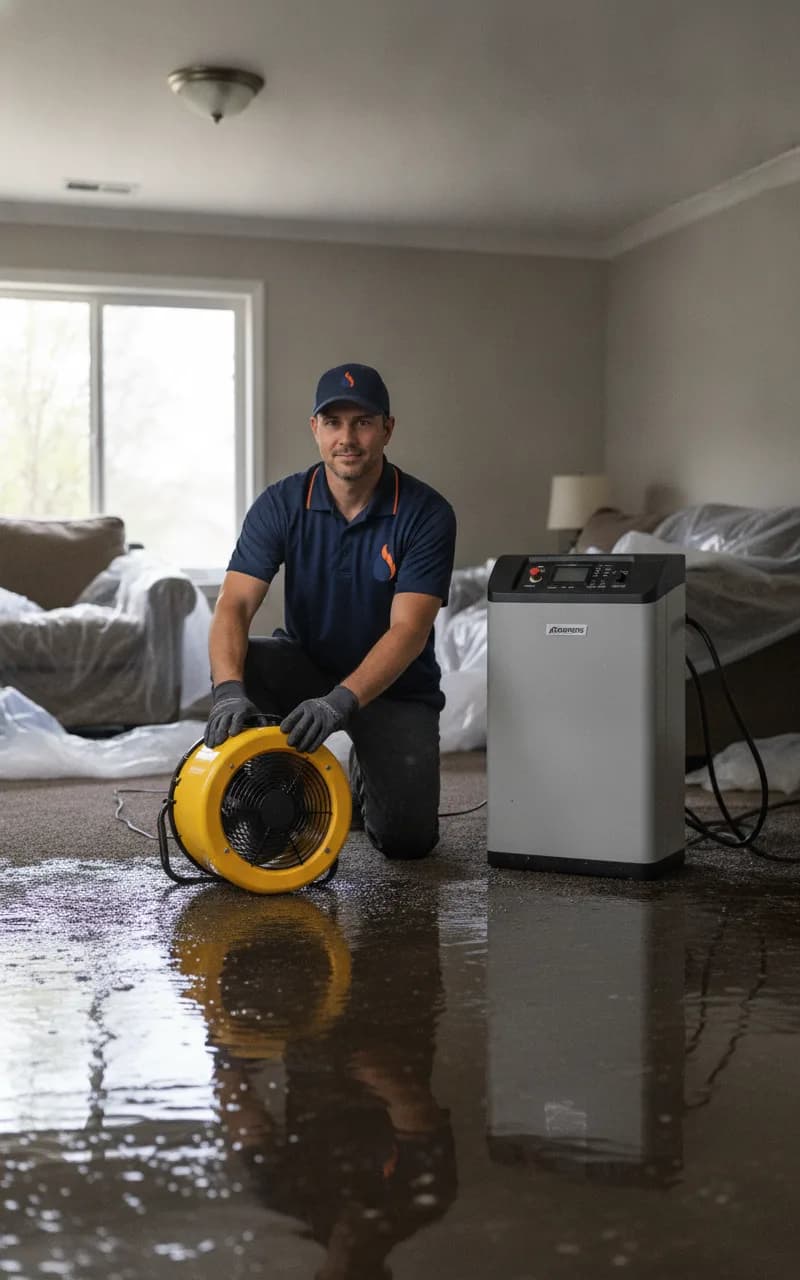
Call Now — (224) 497-3851We design the drying for your specific structure — placing commercial-grade air movers and dehumidifiers in the right configuration, then returning to take documented moisture readings every day until the materials hit a target dry standard. This is the difference between guessing a building is dry and proving it, and it's the part of water restoration that most determines whether the problem comes back.
We're brought in both as the drying phase of our own water jobs and on its own — for homeowners and businesses whose water has already been extracted but who need the structure dried right, and dried to a standard their insurer will accept.
What we do
Structural drying is engineering, not just “point fans at it.” The number and placement of air movers, the dehumidifier capacity, and the daily readings all follow the IICRC drying science for the materials and conditions involved. We dry to a documented target rather than an arbitrary number of days, so the building is verified dry and the records back it up.
- Commercial-grade air movers and dehumidifiers sized to the structure
- Drying plans designed for the specific materials and conditions on site
- Daily moisture monitoring with documented readings to a verified dry standard
- Drying of hard-to-reach areas: wall cavities, subfloor, and under-slab moisture
- Drying for both residential and commercial buildings
- A documented drying record your insurer can rely on
- Coordination with the rest of the restoration so rebuild starts on dry materials
Our process — what to expect
Assess the moisture
We map the affected materials and take baseline moisture readings to understand exactly how wet the structure is and where.
Design the drying
We calculate the air mover and dehumidifier setup the structure needs — placement and capacity matched to the materials and conditions, not a one-size guess.
Set equipment
Commercial-grade air movers and dehumidifiers go in, configured to dry wall cavities, subfloor, and trapped moisture, not just open surfaces.
Monitor daily
We return to take documented moisture readings each day and adjust the equipment as the structure dries.
Verify and document
When materials hit the target dry standard, we confirm it with readings and hand off a drying record your insurer can rely on.
How we handle your insurance
Insurers increasingly expect drying to be documented, not assumed — and a verified drying log is one of the cleanest pieces of evidence in a water claim. We record baseline moisture readings, daily progress, equipment used, and the final verified-dry confirmation, which gives your adjuster exactly what they need to approve the mitigation portion of the claim. We bill your carrier directly and coordinate throughout.
Why Power Dry
Structural drying is the core of what Power Dry's founder does — 8 years in the field, with the two IICRC certifications that define this discipline: ASD (Applied Structural Drying) and CDS (Commercial Drying Specialist). Those certs mean the drying is done to a science-based standard, with the daily readings to prove it, whether it's a single room or a commercial floor.
Frequently asked questions
How long does structural drying take?
Most structures dry in 3–5 days depending on how saturated they are and the materials involved. We monitor daily and dry to a verified standard rather than to a guessed deadline.
Why not just use my own fans?
Household fans move air but don't pull moisture out of the structure, and they can't reach what's trapped in wall cavities and subfloor. Commercial air movers paired with dehumidifiers and daily metering are what actually dry a building.
How do you know when it's actually dry?
We take documented moisture readings against a target dry standard for the materials — so “dry” is verified with numbers, not assumed.
Can you dry it without tearing everything out?
Often, yes. Proper structural drying is what lets us dry materials in place and avoid unnecessary teardown wherever it's safe to.
Do you do commercial buildings too?
Yes. Our founder holds the IICRC Commercial Drying Specialist (CDS) certification, and we handle both residential and commercial structural drying.