
Crystal Lake & McHenry County, IL
Sewage Cleanup & Black Water Removal in McHenry County
A sewage backup is not a job for a mop and a bucket. What's on your floor is Category 3 water — “black water” — and it carries bacteria, viruses, and other contaminants that make it a genuine health hazard to you, your family, and anyone who walks through it. If you've got sewage backing up into a basement, a bathroom, or a floor drain, the right move is to stay out of the affected area and call a certified crew. Power Dry is IICRC-certified and based in Crystal Lake, and we handle black-water cleanup safely from start to finish. Call us and we'll dispatch.
Call Now — (224) 497-3851We remove the contamination, safely dispose of materials that can't be salvaged, sanitize every affected surface with hospital-grade product, dry the structure, and deodorize — then document the loss for your insurance. This is the category of water damage where doing it yourself isn't just hard, it's a health risk, and where cutting corners on sanitizing is exactly what makes people sick afterward.
In McHenry County, sewage backups usually come from a main line backing up during heavy rain, a failed ejector pump, or a blockage that sends everything back the way it came. Whatever the cause, the cleanup standard is the same: contain it, remove it, sanitize it, and verify it's safe before anyone returns to the space.
What we do
Black-water cleanup is governed by safety: protecting the crew, protecting your household, and making sure the affected area is genuinely decontaminated before it's reoccupied — not just dried and deodorized. Porous materials that have absorbed sewage usually can't be saved and are removed and disposed of properly; hard surfaces are cleaned and sanitized to a hospital-grade standard.
- Sewage and black-water extraction with proper PPE and containment
- Safe removal and disposal of contaminated, unsalvageable materials
- Hospital-grade sanitizing and disinfection of all affected surfaces
- Anti-microbial treatment to address bacteria and contaminants
- Structural drying after decontamination
- Deodorization to remove the residual odor sewage leaves behind
- Full documentation of the loss for your insurance claim
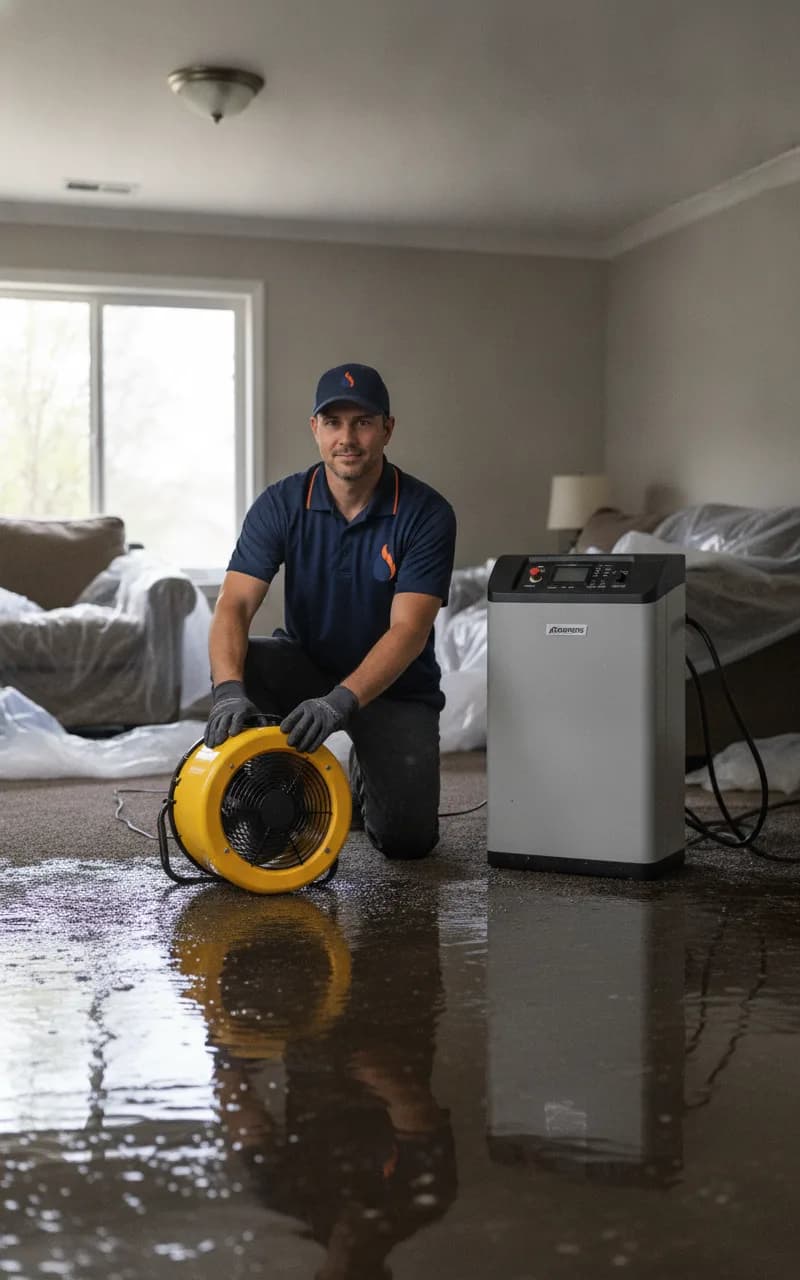
Our process — what to expect
Call and stay clear
Tell us where the backup is and keep everyone out of the affected area — black water is a contamination hazard. We dispatch a crew.
Contain and extract
Working in proper PPE, we contain the area and extract the sewage and black water.
Remove contaminated materials
Porous materials that have absorbed sewage are removed and disposed of properly, since they can't be reliably sanitized.
Sanitize and treat
We clean and disinfect every affected hard surface to a hospital-grade standard and apply anti-microbial treatment.
Dry, deodorize, and document
We dry the structure, deodorize, and document the entire loss for your insurer, billing the carrier directly.
How we handle your insurance
Sewage backup is frequently covered by homeowner's policies, but it often requires a specific “sewer and drain backup” endorsement rather than falling under base coverage — which is why how the loss is documented matters so much. We photograph the contamination, record the affected materials and the sanitizing process, and build a clear scope for your adjuster, then bill your carrier directly and coordinate the claim. If your policy doesn't include backup coverage, we'll tell you up front.
Why Power Dry
Power Dry's founder has 8 years of restoration experience and holds the IICRC HST (Health & Safety Technician) certification — the credential built precisely for contaminated-water work like this, where the priority is decontaminating safely and protecting everyone in the home. Paired with WRT and ASD, it means we don't stop at removing the sewage; we sanitize to standard and dry the structure correctly.
Frequently asked questions
Is it safe to stay in the house?
Stay out of the affected area until it's cleaned and sanitized — black water carries bacteria and other contaminants. Call us and we'll handle it safely.
Why can't I just clean it up myself?
Sewage is a Category 3 biohazard. Without proper PPE, containment, and hospital-grade sanitizing, you risk illness and leave contamination behind you can't see. This is the one category of water loss to leave to a certified crew.
What gets thrown away versus saved?
Porous materials that have absorbed sewage — carpet, pad, soaked drywall — generally can't be reliably sanitized and are removed. Hard, non-porous surfaces are cleaned and disinfected.
Will the smell go away?
Yes. After decontamination and drying we deodorize to remove the residual sewage odor at the source.
Does insurance cover sewage backup?
Often — but it usually requires a sewer/drain backup endorsement on your policy rather than base coverage. We document the loss clearly and bill your carrier directly when it's covered.