
Crystal Lake & McHenry County, IL
Mold Remediation in Crystal Lake & McHenry County
Mold doesn't show up on its own — it follows moisture, which means by the time you see it or smell that musty edge in the air, there's been water somewhere it shouldn't be. The instinct is to grab a spray bottle and wipe it off, but disturbing mold without containment scatters spores through the rest of the house and makes the problem bigger. Power Dry is an IICRC-certified crew in Crystal Lake, and mold remediation done right starts with finding the moisture source and containing the area before anything gets touched. Call us and we'll come take a look.
Call Now — (224) 497-3851We inspect to find both the mold and the water feeding it, contain the area so spores don't spread while we work, remove the mold safely under proper PPE and HEPA filtration, and verify the space is clean when we're done. We keep your family's health front and center the entire time — because mold is fundamentally an indoor-air-quality and health issue, not just a cosmetic one.
We see mold across McHenry County in the usual places: behind finished basement walls, around long-running plumbing leaks, in attics with bad ventilation, and as the aftermath of water damage that was never properly dried. Fix the moisture, remove the mold correctly, and verify — that's the whole job, and skipping the verification step is how it comes back.
What we do
Effective remediation is as much about containment as removal — the goal is to take the mold out without sending spores everywhere else. Our crew identifies and addresses the moisture source first (mold removed without fixing the water source always returns), seals off the work area, removes contaminated materials under HEPA filtration and proper PPE, treats the affected surfaces, and verifies the result.
- Mold inspection and moisture-source identification
- Containment with sealed barriers and negative air to stop spore spread
- Safe removal of mold-contaminated materials under HEPA filtration and PPE
- Anti-microbial treatment of affected structural surfaces
- HEPA air scrubbing to clean the air in the work area
- Addressing the underlying water source so the mold doesn't return
- Post-remediation verification that the area is clean before we close it up
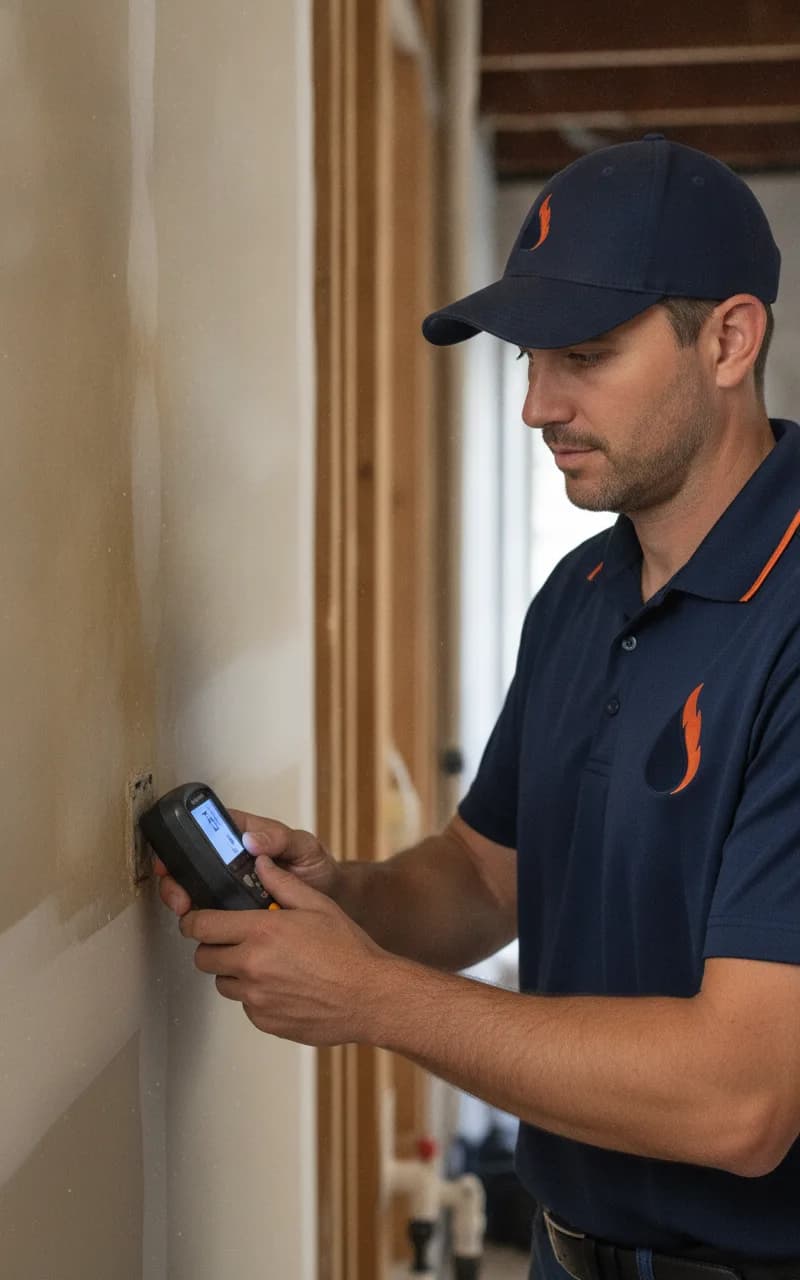
Our process — what to expect
Inspect and find the source
We locate the mold and, just as important, the moisture feeding it — because remediation without fixing the water source is temporary.
Contain
We seal off the work area with barriers and negative air so spores stay put while we work, protecting the rest of the home.
Remove safely
Working in proper PPE and under HEPA filtration, we remove contaminated materials and treat the affected surfaces.
Clean the air
HEPA air scrubbers run to capture airborne spores stirred up during removal.
Verify
We confirm the area is clean before reopening it — the step that separates real remediation from a cosmetic wipe-down.
How we handle your insurance
Mold coverage is the most situational of all — many policies cover mold only when it results from a covered water loss (like a sudden burst pipe) and exclude mold from long-term, neglected leaks. We document the mold, the moisture source, and the apparent cause carefully so your adjuster has a clear picture, and where it's a covered loss we bill your carrier directly and coordinate the claim. When it isn't covered, we'll tell you honestly and give you a straightforward scope.
Why Power Dry
Power Dry's founder has 8 years in water and structural restoration and holds the IICRC HST certification — Health & Safety Technician — which is the credential that matters most for mold, because the real risk of mold is to the air you breathe and the people in the house. Combined with WRT and ASD, that means we don't just remove visible mold; we find and dry the moisture that caused it so it doesn't return.
Frequently asked questions
Is mold dangerous?
It can affect indoor air quality and health, which is exactly why we contain and remove it under proper safety controls rather than wiping it away. Our crew is IICRC Health & Safety (HST) certified.
Can't I just clean it with bleach?
Wiping or bleaching visible mold without containment scatters spores through the house and leaves the moisture source intact — so it comes back. Proper containment and source repair are what actually solve it.
How do you know it's really gone?
We finish with post-remediation verification, confirming the area is clean before we reopen it — not just assuming it worked.
Why does mold keep coming back after I clean it?
Because the water feeding it is still there. We find and address the moisture source as part of remediation, which is what stops the cycle.
Will insurance pay for mold removal?
Sometimes — many policies cover mold only when it stems from a sudden covered water loss. We document the cause clearly so your adjuster can decide, and bill directly when it's covered.